We proudly serve clients across Australia , Canada and USA.
We proudly serve clients across
Canada, Australia and USA.
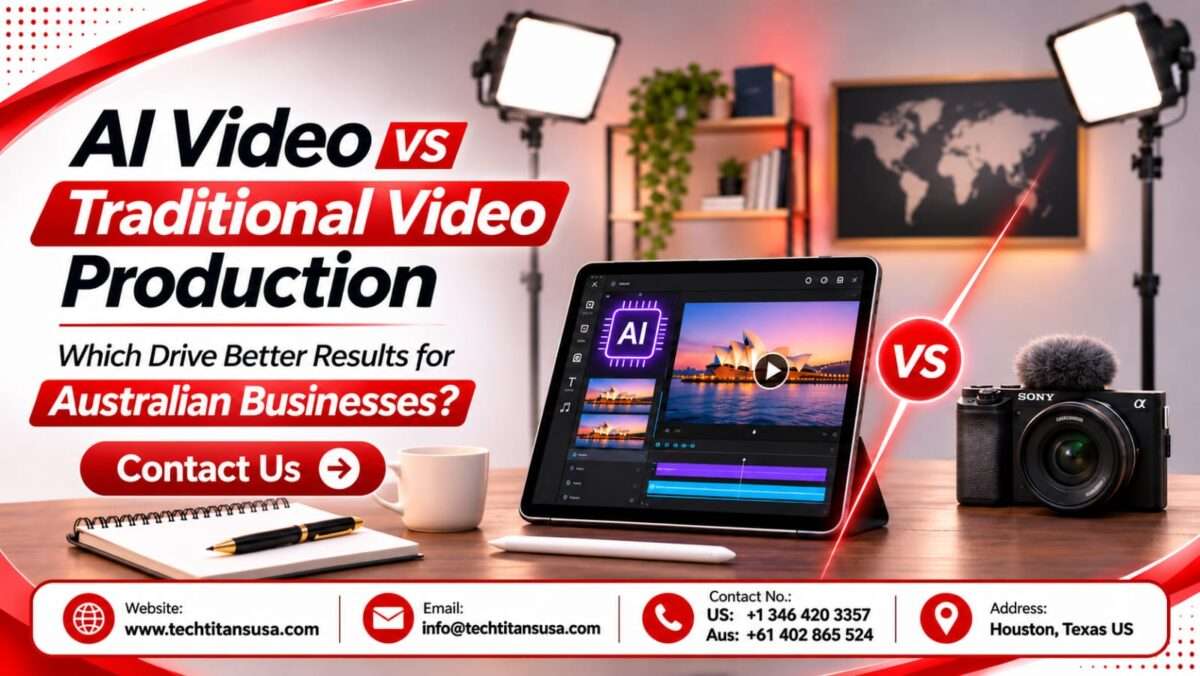
A few years ago, if you wanted a business video, the process was fairly standard. You hired a crew, booked a day, paid for editing and waited a few weeks. Now you can type a script into a tool and have something watchable by lunchtime. So where does that leave the traditional shoot?
The honest answer is that neither option is better across the board. AI video and traditional video production are good at different things, and plenty of Australian businesses get the best results by using both. This guide compares them on cost, quality, speed, flexibility and trust, so you can work out which one suits your next project.
Traditional video production means filming real people, products and places with cameras, lighting and audio gear, then editing the footage into a finished video. It usually involves a producer, a camera operator, a sound person, an editor and sometimes actors, makeup and a location.
It’s the approach behind most TV ads, brand films, testimonial videos and corporate content you’ve seen. When it’s done well, it feels human, because it is.
AI video production uses artificial intelligence tools to generate or assist with video. That can mean creating scenes from text prompts, animating still images, using digital presenters, generating voiceovers or speeding up editing tasks like captions and resizing.
It’s not one single thing. Some AI video is fully generated, some is a mix of real footage and AI, and some just uses AI to speed up the boring parts of editing. Knowing which type you’re talking about matters when you compare costs and results.
Here’s how the two stack up in the areas that matter most to most businesses.
This is usually the first question: is AI video cheaper than traditional video? In most cases, yes, and often by a wide margin. A professionally filmed business video in Australia can easily run into the thousands of dollars once you add crew, equipment, location, talent, editing and music. Bigger productions climb well past that.
AI video tools often charge a monthly subscription, commonly somewhere in the tens of dollars for entry plans, with higher tiers for heavier use. If you hire an agency to make AI videos for you, the price will be higher than doing it yourself, but typically still lower than a full shoot. Costs vary a lot, so always compare actual quotes rather than relying on averages.
AI wins here. A simple AI video can be produced in hours or days. A traditional shoot involves planning, scheduling, filming, editing and revisions, which usually stretches into weeks. If you need a video for a flash sale next Friday, AI is far more realistic.
Traditional video still has the edge for real-world authenticity. Cameras capture real people, real expressions and real places with natural detail. AI has improved enormously, but it can still produce odd hands, warped text, strange physics and an unmistakable “AI look” in certain scenes.
That said, for stylised content like animation, motion graphics, abstract visuals and product scenes, AI can look excellent, sometimes better than what a small budget could achieve with a camera.
With AI, changing a scene, a script or a colour is often just a matter of regenerating. With live action, a change after filming can mean a reshoot. AI also lets you create scenes that would be impractical or impossible to film, like a product floating through space or a historical setting.
This is where traditional production shines. Customers trust real faces. A testimonial from a real customer, a tour of your actual shopfront or a founder speaking directly to the camera carries weight that a synthetic presenter can’t match. In industries built on trust, like healthcare, legal, financial services and trades, that matters a lot.
Live action gives you exact control over what’s captured, since what’s in front of the camera is what you get. AI can be unpredictable. Keeping a character or product looking the same across multiple shots is getting easier, but it still takes effort and a bit of luck.
Need the same video in five versions, or in several languages? AI makes that much easier. Traditional production would mean multiple shoots or heavy editing. For businesses producing lots of social content, this is a significant advantage.
Live action is usually the better call when authenticity is the point.
If you’re a Brisbane dentist, a Melbourne accountant or a Perth builder, people want to see the actual humans they’ll deal with. That’s hard to fake and risky to try.
AI tends to make more sense when speed, cost and flexibility matter more than a real-world look.
A Sydney ecommerce brand testing ten ad hooks for a summer sale will usually get more value from AI than from filming ten separate scenes.
Plenty of smart businesses don’t pick one. They mix them.
For example, you might film a short interview with your founder and a few shots of your real shopfront, then use AI to create animated explainer sections, generate background visuals, add captions and make social cutdowns. Or you might shoot one strong hero video and use AI tools to repurpose it into a dozen smaller clips.
This approach keeps the human feel where it counts and uses AI to stretch your budget and speed up delivery. For most small and mid-sized Australian businesses, it’s the most practical option.
Under Australian Consumer Law, businesses can’t engage in misleading or deceptive conduct. That includes using AI to create fake testimonials, fake reviews or exaggerated results. Make sure what your video shows reflects reality.
Don’t use someone’s face, voice or likeness without their consent. If you’re using AI avatars or voices, check the licensing terms of the tool. If you’re unsure about the legal side, ask a lawyer familiar with advertising and privacy law.
Audiences here notice when something feels off. Australian accents, local slang, familiar locations and cultural references all help. Many AI voices still sound overseas or stiff, so test options and listen carefully. Pronouncing names like Woolloomooloo, Wollongong or Toowoomba correctly is a small thing that makes a video feel properly local.
Some platforms ask creators and advertisers to label AI-generated content, and policies keep changing. Check the current rules for each platform you plan to use.
Ask yourself these questions before choosing:
If trust and emotion are the priority, lean traditional. If speed, cost and flexibility matter more, lean AI. If you want both, go hybrid.
Sometimes it’s easier to see this in practice. Here are a few made-up but realistic situations.
The owner wants quick, eye-catching social clips. A mix works well: a short phone-filmed clip of the actual cafe and staff, plus AI-animated menu graphics and captions. It’s cheap, fast and still feels real.
Clients are making a serious decision, so real faces matter. A traditionally filmed introduction from the partners is worth the spend. AI can then help turn it into short clips and captions for LinkedIn.
The team needs ten ad variations before the sale starts. AI is the practical choice, letting them test hooks and visuals before putting money behind the winners.
The cheapest option isn’t always the best value. A cheap video that damages trust costs more in the long run than a slightly pricier one that works.
AI tools still need direction, editing and quality checks. Without a skilled person guiding them, results can look generic or sloppy.
Think about who’s watching and what they expect. A B2B explainer and a customer story need very different approaches.
AI video versus traditional video isn’t a battle with a single winner. AI is faster, cheaper and more flexible, and it’s brilliant for explainers, ads and scalable content. Traditional production is more authentic, more trustworthy and still the best choice when real people and real places are the heart of the story.
For most Australian businesses, the smartest move is to match the method to the job. Use live action where trust matters, AI where speed and cost matter and a mix when you want the best of both.
Usually, yes. AI avoids crew, location and equipment costs, though professional AI production still costs money. Compare real quotes for your specific project before deciding.
Not for everything. AI works well for explainers, ads and animation, but real footage is better for testimonials, team introductions and trust-based content.
Choose live action when authenticity matters most, such as customer stories, founder messages, showing your real premises or working in trust-heavy industries.
Yes, for many uses, especially with skilled editing. Always review for errors, off-brand details and unnatural elements before publishing.
Rules vary by platform and situation. Never use AI to mislead customers, and always check each platform's current guidelines before you publish.