
We proudly serve clients across Australia , Canada and USA.
We proudly serve clients across
Canada, Australia and USA.
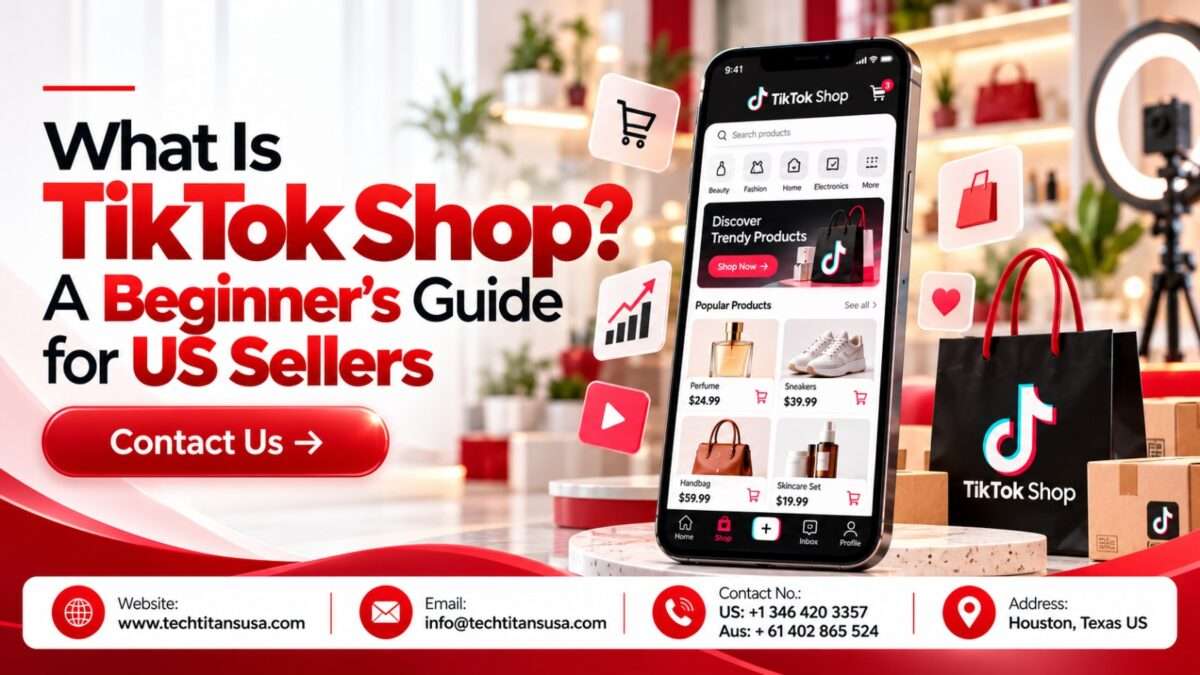
A couple of years ago, most people used TikTok to watch dance clips and cooking hacks. Now they’re buying the pan, the blender and the lip gloss they just saw in the video, without ever leaving the app. That shift is why so many small brands are asking the same question: what is TikTok Shop, and should I be selling there?
This guide explains TikTok Shop in plain English. We’ll cover how it works, what it costs, who can sell on it and whether it’s actually worth your time. If you’re a US seller trying to decide where to put your effort, this should save you a few wasted weeks.
A quick heads-up. TikTok changes its fees, rules and programs often. The numbers below are accurate as far as we know right now, but always double-check the Seller Center before you price anything.
TikTok Shop is TikTok’s built-in ecommerce feature. It lets businesses list products inside the app, so users can discover, tap and buy without being sent to an outside website. Payment, checkout and customer data all stay inside TikTok.
Think of it as a mix of a social feed and an online marketplace. Instead of searching for a product the way you would on Amazon, shoppers stumble across things while scrolling. That makes TikTok ecommerce feel more like impulse shopping at a checkout aisle than planned shopping at a store.
US sales through the platform have grown quickly over the last couple of years, and TikTok has continued to push the feature hard. If you’ve watched a creator hold up a product with a little yellow basket icon, you’ve seen it in action.
The mechanics are simpler than they sound. A seller sets up a shop, lists products, and customers buy through one of a few different paths. Here are the main ones.
You post a video, then attach a product link to it. Viewers tap the product tag and buy straight from the video. This is the bread and butter of TikTok Shop for most brands.
You go live and demo products in real time, answer questions and push limited-time deals. Live selling can create urgency and trust fast, but it takes practice. Plenty of sellers find their first few streams awkward, and that’s normal.
Your products also appear in a shop tab on your profile and in TikTok’s Shop section, which works a bit like a mini storefront. Shoppers can browse, search, and check out here without watching a video first.
This is the part that makes TikTok Shop different from most marketplaces. You can invite creators to promote your products and pay them a commission on every sale they drive. They make the videos; you handle the product and shipping. Many successful shops grow almost entirely through creator partnerships.
Most US-based businesses and individual sellers can apply. You’ll generally need a valid US ID or business registration, a US bank account, a TikTok account, and products that follow TikTok’s category rules. Some categories, such as certain supplements, adult products, and restricted items, aren’t allowed or need extra approval.
Approval is usually quick for standard applications, sometimes within a few days. After that, you’ll complete setup in TikTok Shop Seller Center, which is the dashboard where you manage products, orders, shipping, ads, and payouts.
If you’re brand new to ecommerce, it helps to have your product photos, descriptions, and pricing ready before you apply. It speeds up setup and avoids silly rejections.
There’s no monthly subscription and no setup fee. Instead, TikTok takes a cut of each sale. But the headline number doesn’t tell the whole story.
For most US categories, TikTok charges a referral fee of about 6 percent per order, with a few categories like jewelry slightly lower. Payment processing has been bundled into that fee in the US. New sellers have also been offered a reduced introductory rate for their first 30 days, provided they make a sale within a set window after onboarding.
Keep an eye out here. Several seller resources have reported the standard rate rising to 8 percent for many categories, while TikTok’s own published table has shown 6 percent. Check your Seller Center for the current figure before you work out your margins.
If you use affiliates, you set the commission rate yourself, and it can run from a few percent up to 30 percent or more. Beauty and other competitive categories tend to be higher. A higher commission attracts more creators, but it also eats into your profit, so you have to find a balance.
Since March 2026, US sellers have mostly had to ship through TikTok’s own logistics options, either its fulfillment service (FBT) or TikTok-run shipping labels. Using your own carrier labels is no longer the norm. Fulfillment fees vary by size and weight, so check the rate card for your products.
Many sellers also spend on TikTok Shop ads to boost visibility. Returns carry an admin fee on top of the lost sale. And of course there’s your product cost, packaging, and the time it takes to make content.
Add everything up and the real cost of selling often lands well above the 6 percent headline. Some sellers report all-in costs of 25 to 30 percent of the sale price, or more when ads and affiliate commissions are heavy. That doesn’t make it a bad deal. It just means you should run the numbers before assuming it’s cheap.
Beauty and personal care, home and kitchen items, fashion accessories, fitness gear, pet products, and small gadgets tend to perform well. Anything visual, affordable, and easy to demonstrate in fifteen seconds has an advantage.
Products that struggle include bulky, expensive, or highly technical items that people want to research for weeks. Low-margin goods can also be tricky because fees and commissions can swallow your profit.
A good rule of thumb is to look for products you can sell at a price that still leaves a healthy margin after shipping, platform fees, and a creator commission. If your margin is razor-thin before those costs, TikTok Shop will probably squeeze it harder.
Sign up through the TikTok Shop Seller Center, submit your business information, and wait for approval. Have your ID, bank details, and tax information handy.
Upload clear photos, write plain descriptions, and set competitive prices. Include short videos if you can, since they help products stand out. Start with a handful of your best sellers rather than your whole catalog.
Choose a logistics option and make sure you can ship quickly. TikTok tracks late shipments and cancellations, and poor performance can hurt your visibility or even get your shop restricted.
Post short videos showing the product in use, and reach out to creators who fit your niche. Send free samples to a small group first and see who actually makes good content before you scale up.
Watch your conversion rate, return rate, shop health score, and profit per order, not just total sales. High revenue means very little if you’re losing money on each order.
It depends on your product, your margins, and your appetite for content. Here’s an honest look at both sides.
The audience is huge, and shoppers are often in a buying mood. A single video can bring a flood of orders, even for a brand with no following. Setup costs are low, the fee structure is simple on paper and creators can do much of your marketing for you.
Results can be unpredictable. A product that goes viral one week may disappear the next. Fees and commissions add up, fulfillment rules limit your control, and you’re building on a platform you don’t own. Policy and fee changes can happen with little notice, and TikTok’s US ownership structure has been through its own shake-ups, though shops have continued operating.
TikTok Shop tends to suit brands with visual, affordable products, sellers comfortable with video or working with creators, and businesses that can handle a sudden spike in orders. It’s less suited to people who want a quiet, predictable channel with no content work.
The smart way to look at it is as one sales channel among several, not your whole business. Keep your own website, email list, and other marketplaces alive in case the rules change.
Sellers see 6 percent and assume the rest is profit. Then they pay for samples, affiliate commissions, ads, fulfillment, and returns. Work out your profit per order before you scale.
One viral video is great, but a steady flow of decent content usually builds a stronger shop than hoping for lightning.
Ordering thousands of units because a video did well is a classic trap. Test with smaller batches, and reorder when demand proves itself.
Slow replies, late shipping, and bad reviews hurt your shop score. Respond quickly and ship on time, because TikTok pays attention.
So, what is TikTok Shop? It’s a way to sell directly inside one of the world’s biggest social apps, powered by short videos, live streams, and creator partnerships. For the right products and the right seller, it can open up customers you’d struggle to reach any other way.
But it isn’t magic. The fees are higher than they look, the rules change often, and success depends heavily on content and creators. Start small, test a few products, watch your margins, and treat it as one piece of a bigger sales plan. If the numbers work, you can scale from there.
It's TikTok's built-in marketplace where businesses sell products directly inside the app. Customers can discover, tap, and buy without leaving TikTok.
TikTok takes a referral fee on each completed order, which has been about 6 percent for most US categories. There are also fees for fulfillment, returns, and optional ads.
It can be, especially for visual, affordable products. Just calculate your real margin after fees, creator commissions, shipping, and ads before you commit.
No. Many shops grow through affiliate creators and shopping ads rather than their own following. Good product videos still help a lot.
In the US, most sellers now need to use TikTok's fulfillment or shipping options. Check Seller Center for the latest rules for your products.